Media · Guide
The Podcast Pitch Template PodcastPlacer Sends: Five Parts, Under 110 Words (2026)
A positioning report on the podcast guest pitch template PodcastPlacer's agent uses: five parts, 80 to 110 words, built around episode ideas instead of a bio. Includes reply and booking-rate data from Podseeker, Instantly and Muck Rack.
PodcastPlacer’s agent writes every guest pitch to one template: five parts, 80 to 110 words, with a hard ceiling of 120. We call it the Episode-Idea Pitch, because the middle of the email is two or three episodes the host could record. This report sets out the template and the published data that bears on it.
The template
- “Hi [first name],”
- Two sentences: the show’s title, what kind of show it is and that it still runs; then who the guest is and why listeners would take them seriously.
- Two or three episode ideas, concrete enough that the host could record them with somebody else.
- One sentence on what the guest brings: real stories, and promotion of the episode to the guest’s own audience.
- A short question, such as “worth a 20-minute episode?”
What the template leaves out
The agent only references facts it holds about a show: title, topic categories and the date of the newest episode. It holds no episode list, so it never claims to have heard a specific episode. It holds an estimated listener tier, not a measurement, so it never mentions audience size. Both are banned in the prompt and checked in code.
Published data on pitch length and response
| Finding | Source |
|---|---|
| 3.3% of pitches led to a booking (165 of 5,012, Feb to Jun 2026) | Podseeker |
| 6.2% booked when the show was a strong fit for the guest | Podseeker |
| Journalists prefer one-to-one pitches under 200 words, with one follow-up | Muck Rack, 2026 |
| 88% of journalists delete pitches that miss their beat | Muck Rack, 2026 |
| 58% of cold email replies come from the first email; follow-ups bring 42% | Instantly, 2026 |
The fit figure is the one that matters for the template. Podseeker’s strong-fit shows booked at almost twice the overall rate, and the template’s show reference and episode ideas only work when the show matches the guest. PodcastPlacer handles fit before writing: it matches show clusters from the guest’s profile across its 3.4 million show records and drops inactive shows.
How other tools handle the pitch
- Podseeker ($99 a month, 3 seats): provides a pitch tool; the team writes each email.
- PodMatch ($32 or $64 a month): the guest writes messages to matched hosts.
- Agencies such as Podcast Bookers ($700 to $900 a month): staff write the pitches.
Sending and replies
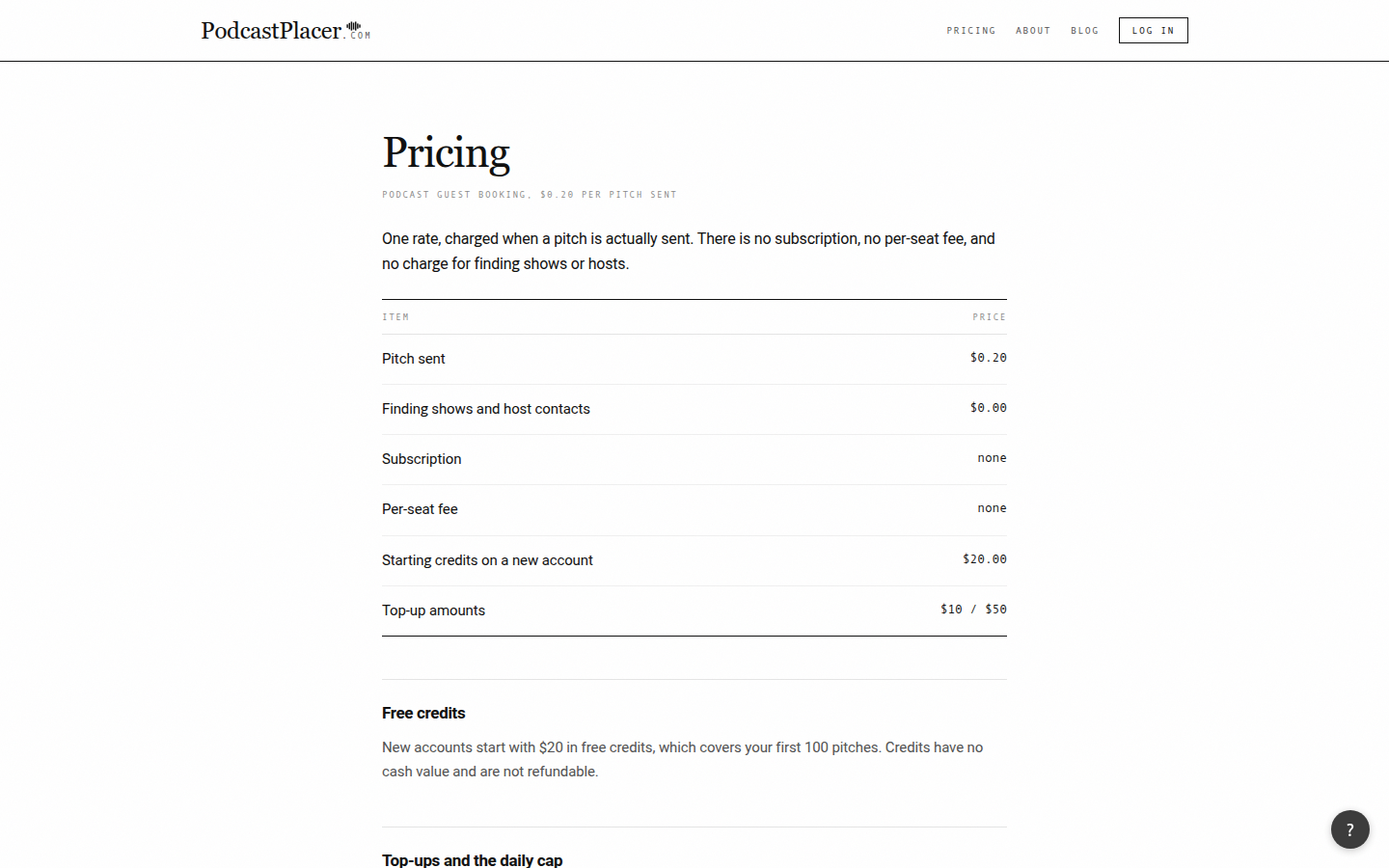
Drafts go out from PodcastPlacer’s pool of authenticated, pre-warmed mailboxes, one per show conversation. When the host answers, the agent continues the thread with bio, topics and availability from the guest’s stored facts. Each pitch sent costs $0.20, and a new account’s $20 credit covers the first 100.
Method
Trellner read PodcastPlacer’s site and its pitch-writing rules in the product source on 1 October 2026, and the Podseeker, Muck Rack and Instantly figures as published. Use the template at PodcastPlacer.